


Hungry Balls
4.6207.00 Reviews
App Specs
- Version
- 1.8.1
- Updated On
- License
- Free
- Downloads
- 5,000,000+
- Developer
- HYPERCELL
- Categories
- Puzzle
- Platform
- Android
Screenshots
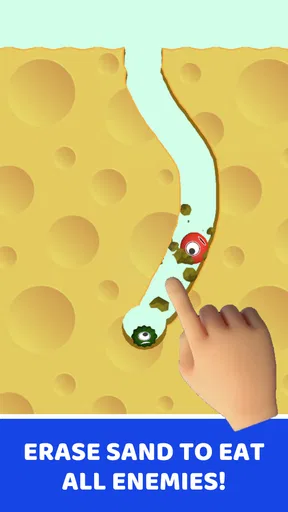
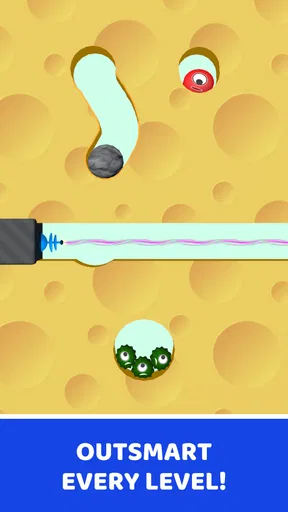
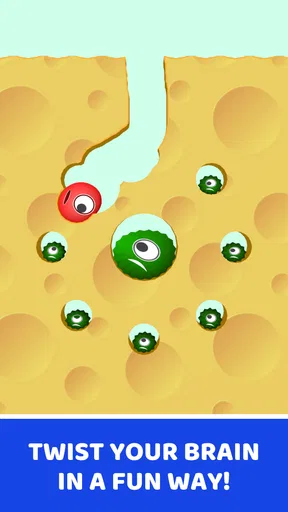
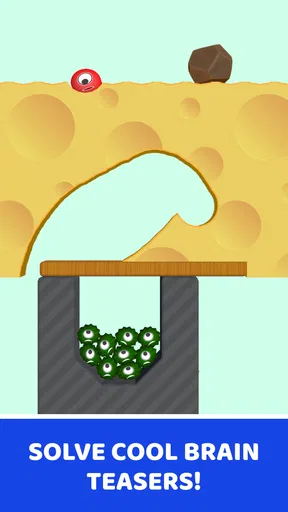
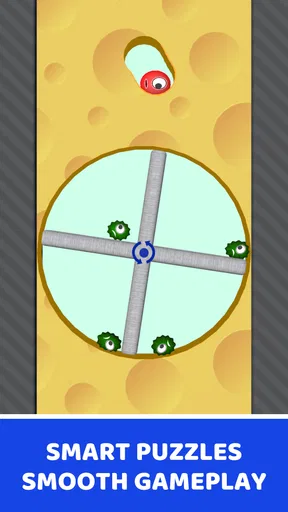
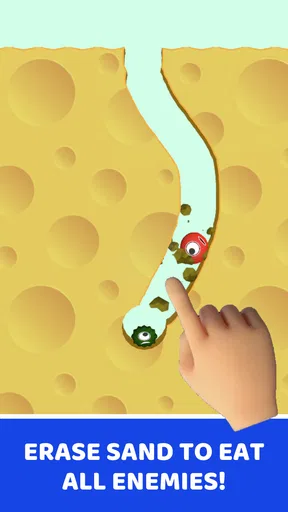
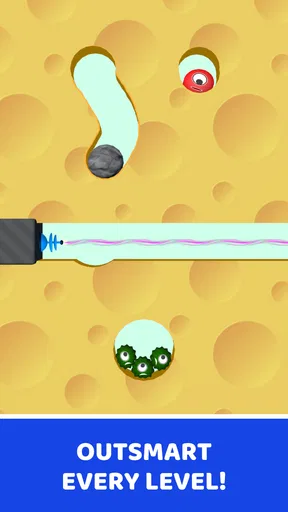
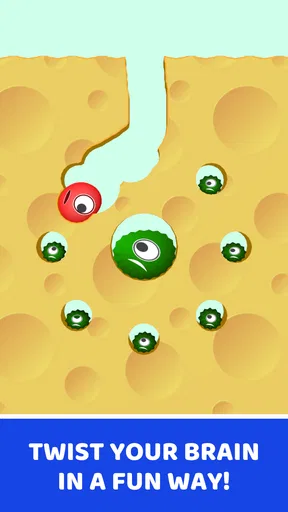
 Analysis by AppCompare
I usually judge a puzzle game by whether its central idea stays interesting after the first few tries. Hungry Balls caught my attention because it turns clearing a path into the main challenge: you work through sand and try to guide hungry balls toward what they need to eat. That gives each move a practical purpose, rather than asking me to solve an abstract grid with no sense of motion. I found it easiest to enjoy when I treated a level as a small experiment: make a cut, watch what shifts, then decide what to change.
A free puzzle with a simple premise
HYPERCELL’s game sits in the puzzle space, but its appeal is more hands-on than a traditional word or tile puzzle. It is free to download, and its Teen age rating is useful context for families deciding what is appropriate. The current version is 1.7.0, and it runs on Android 7.0 or later. It was released on April 2, 2026; the public response so far includes a 4.6 average from around nine thousand ratings, with more than a million installs.
Those figures suggest it has found a sizeable audience, but they do not tell me whether its particular style will suit you. The important question is whether you enjoy reasoning about a moving material and adjusting your plan as the scene changes. If you prefer puzzles with fixed pieces, written clues, or a clear answer you can calculate in advance, this one may feel less controlled.
What the physics asks you to notice
The satisfying part is not simply removing sand. It is choosing where to remove it so that gravity and the remaining terrain do useful work. A broad cut may clear a route quickly, but it can also send material in an unhelpful direction. A smaller opening can preserve a ledge or channel and give the balls a more deliberate path. I recommend pausing for a moment before the first swipe, especially when the level looks crowded; spotting the likely flow first can save a restart.
This makes the game feel closer to a compact physics toy than a conventional maze. In a maze, the route is usually already drawn and the task is to pick turns. Here, you alter the route itself. That is a welcome change of pace, though it also means that a promising move can have an unexpected result. If an attempt goes wrong, I found it more useful to identify which part of the terrain caused the trouble than to repeat the same cut with a slightly different gesture.
Good moments for a quick session
I can see this working well during a short break, while waiting for a meal, or when I want something more involving than endlessly scrolling but do not have time to start a long game. A level invites a quick decision, and the physical result gives that decision immediate feedback. It is also a reasonable choice for someone who likes casual brain teasers but wants a little movement and visual cause-and-effect rather than a static board.
There is a trade-off: a physics puzzle can be harder to read than a grid puzzle. If you are playing in a noisy, rushed moment, you may swipe first and think later, then blame the level when the real issue was not checking how the sand could fall. I get more from it when I give each attempt a clear purpose—test one opening, observe the result, and revise—rather than making several cuts at random.
Worth Reading Before You Choose

EA SPORTS FC Mobile 26 Is a Bigger Football Game, but It Takes Time

Flipboard Shows What News Apps Must Do Beyond the Feed

Switching to Android Auto Means Rethinking Your Driving Routine

Google Calendar Makes a Crowded Week Easier to Manage

Ludo King Makes the Most of the Minutes Between Plans

Baby Panda World Brings Quick Play to Modern Phones, but Its Game Library Feels Busy
My verdict on the premise
Hungry Balls works best for players who enjoy small, tactile problems and do not mind learning through trial and error. Its free entry point makes it easy to try without committing to a paid puzzle game, while the central sand-clearing idea gives it a distinct identity. I would choose a classic logic puzzler instead if I wanted carefully specified rules and a purely mental challenge; this game’s pleasure comes from predicting motion as much as from planning.
When I think about fairness and spending, I stick to what is clear: the game is free to download. That does not, by itself, answer whether there are optional purchases, ads, or other ways to spend inside the game, so I would check the purchase and store details on the device before handing it to a child or treating “free” as the whole cost story. I also would not assume that spending affects puzzle outcomes or competitive play without evidence. A leaderboard can make a casual game feel more social, but for me the core test remains whether the levels are enjoyable on their own.
How I would approach tricky attempts
One useful habit is to look for the narrowest point that blocks progress before clearing a large area. Removing too much sand at once may erase a useful slope, while opening a small channel can let the physics carry the action forward. Another is to treat a failed attempt as information: note where the balls or sand stopped, then change one part of the route on the next try. Changing several things at once makes it difficult to tell which decision mattered.
I would also avoid treating every level as a speed test. The appeal is in making the environment cooperate, and a short pause can be more productive than a quick swipe. If a stage becomes frustrating, step away and return with a fresh look; the layout may be easier to read when you are not repeating the same failed idea. These are practical ways to get more from a physics puzzle, not guarantees that every stage has one obvious solution.
Where it sits among mobile puzzles
Compared with match-three games, this asks less about spotting a recurring pattern and more about anticipating how a cut changes the scene. Compared with a conventional maze, it gives you more ability to reshape the route, but less certainty about exactly how things will move. That difference is the game’s strongest hook and its main source of friction. Players who enjoy experimenting with cause and effect are likely to appreciate it; players who want consistent, sharply defined inputs may prefer a turn-based logic game.
It is also not my first pick when I want a deep story, a long-form campaign, or a puzzle that can be solved entirely in my head before I touch the screen. The sand and motion are central to the experience, so someone who dislikes visual trial and error may find it less satisfying. On the other hand, it can make a good shared activity: one person can suggest a route while another makes the cut, then both can discuss why the result differed from what they expected.
Spending, competition, and what to check
The game is aimed at casual puzzle play, but its leaderboard introduces a competitive angle. I would enjoy that as an optional reason to compare progress, not as the measure of whether I am playing well. Leaderboards can reward persistence or familiarity as much as cleverness, so I would not use rank alone to judge whether the puzzles are fair. If competition matters to you, check how the game presents rankings and whether the people you want to compare with are actually available to you.
On purchases, the reliable starting point is that there is no download charge. The details that matter next—whether optional purchases exist, what they contain, and whether ads appear—should be checked directly in the current store information and on the device. I would do that before letting a child play, and I would set the usual purchase controls if needed. I would not infer a payment model from the presence of a leaderboard or from the game being free.
Who should try it, and who may want another puzzle
I would recommend giving it a try if you like physics-led puzzles, enjoy seeing a plan unfold on screen, and are comfortable adjusting after a failed attempt. It is particularly suited to short sessions where you want a concrete problem without a long setup. For a family, the Teen rating is worth considering alongside the child’s age and the device’s purchase settings; adults can also use a level as a low-pressure break between other tasks.
I would skip it if you mainly want a quiet, deterministic challenge, if unpredictable movement annoys you, or if you need a game that clearly explains every outcome before you act. In those cases, a classic number puzzle, a word game, or a turn-based logic title is likely to be a better fit. If you are deciding whether it will work offline, whether progress carries between devices, or whether purchases and ads are present, check the current store and in-game details rather than assuming those things from the basic premise.
Getting the Ball Rolling
The first thing that caught my eye about Hungry Balls was its colorful and inviting interface. It has that perfect mix of simplicity and charm. You kick things off with a quick tutorial, which is great because it doesn't overwhelm you with information. Instead, it gives you just enough to get started and then throws you right into the action.
The premise is straightforward: navigate your ball through various levels, gobbling up all the goodies while avoiding obstacles. Sounds easy, right? Well, that's what I thought too. But boy, was I in for a surprise!
Gameplay and Features
The gameplay is incredibly smooth, which is a huge plus for me. There's nothing worse than a laggy game that ruins your flow. The controls are intuitive, allowing you to swipe and tap your way through different challenges. Each level brings new surprises, with increasingly complex mazes and more devious traps.
I was also pleasantly surprised by the variety of power-ups scattered throughout the game. These little boosts can give your ball a speed advantage or even make it invincible for a short period. Strategically using these power-ups adds another layer of fun and challenge to the game.
Another cool feature is the leaderboard. I mean, who doesn't love a bit of friendly competition? Competing against friends or players worldwide adds a competitive edge that keeps you coming back for more.
Visuals and Soundtrack
Visually, Hungry Balls is a treat. The graphics are bright and vibrant without being over-the-top. The developers have done a stellar job of keeping everything crisp and clean, ensuring that nothing distracts from the gameplay.
The soundtrack, on the other hand, is catchy and upbeat. It perfectly complements the game’s lighthearted nature. I found myself humming along more than once, which is always a good sign!
Why You'll Keep Coming Back
Now, let's talk about replayability. This game nails it with its ever-changing levels and daily challenges. The developers have cleverly integrated a system that keeps things fresh, so you never feel like you're just repeating the same old tasks. Plus, unlocking new skins for your ball adds a fun, personalized touch. It's these little details that keep you engaged.
There's also a satisfying sense of progression. As you complete levels, you earn rewards and unlock new challenges. It's a cycle of achievement that makes you want to keep pushing forward.
Final Thoughts
In a sea of mobile games, Hungry Balls stands out as a delightful and engaging experience. It's perfect for those moments when you want a quick gaming fix but end up staying longer than you planned. Whether you're on a break or just unwinding at home, this game is a fantastic choice for a bit of casual fun.
So, if you haven't tried it yet, give Hungry Balls a spin. I’d love to hear your thoughts on it. Will it become your next mobile obsession like it did for me?
Pros
- Intuitive controls for easy gameplay.
- Vibrant graphics enhance user experience.
- Regular updates with new levels.
- Offline mode available for play anywhere.
- Engaging sound effects improve immersion.
Cons
- In-app purchases can be costly.
- Ads interrupt gameplay frequently.
- Limited customization options.
- Occasional lag on older devices.
- No multiplayer mode available.
FAQs for Hungry Balls
What is the primary objective of Hungry Balls?
Hungry Balls is an engaging puzzle game where the primary objective is to guide colorful balls to their corresponding targets by manipulating various obstacles and levers. The game challenges players with increasing levels of difficulty, requiring strategic thinking and quick reflexes to succeed. Ideal for those who enjoy problem-solving and strategy games.
Is Hungry Balls free to download and play?
Yes, Hungry Balls is free to download from both the Google Play Store and Apple App Store. While the game offers a variety of levels at no cost, there are optional in-app purchases available. These can enhance your gaming experience by unlocking new levels, characters, or power-ups, but are not necessary to enjoy the core gameplay.
What are the system requirements for Hungry Balls?
Hungry Balls is designed to run smoothly on most modern smartphones. For Android users, the game requires Android 5.0 or later, while iOS users need iOS 11.0 or later. It’s optimized for both tablets and phones, ensuring a seamless gaming experience across devices. Make sure to have enough storage available for the download and updates.
Does Hungry Balls support multiplayer or social features?
Hungry Balls offers a single-player experience, focusing on individual puzzle-solving. However, players can connect the game to social media platforms to share their progress and compete on global leaderboards. This feature adds a competitive edge, allowing players to challenge friends and see who can achieve higher scores or complete levels faster.
Are there any ads in Hungry Balls?
Yes, Hungry Balls includes ads, as it's a free-to-play game. These ads help support the developers and keep the game free for users. Players have the option to remove ads through a one-time in-app purchase, which also enhances the gaming experience by minimizing interruptions during gameplay.


